


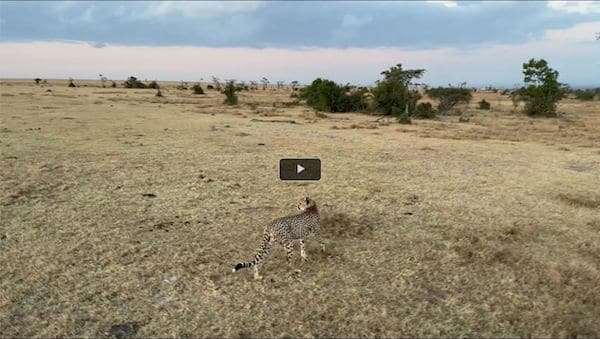
I recorded this cheetah not too long after she had lost a kill to a marauding pack of hyenas who stole her dinner and scared her off.
How it often works on a game reserve – there is a highly effective radio communications network the guides and rangers use to share information on where the bigger resident animals are located (as well as the poachers).
So, when our guide, Moses, got the news that this cheetah had recently made a kill, we immediately and excitedly headed off in the direction we had been told!
We were thrilled to catch the elusive cheetah as she sauntered down her path, but felt for her. If she were human, she’d be fuming behind her recent loss and wondering what her next moves would be … but she seemed unbothered.
A relatively short distance away, we could see a herd of impala who stopped to nervously watch the cheetah as she simultaneously glanced over at them and, almost instantly, continued along her journey, apparently unimpressed by their presence.
I asked Moses why she didn’t go after the meal she needed.
We learned this:
- A cheetah attacks when the target is unaware
- She shortens the distance, stalking close to her prey, and then strikes …
- Giving it all she’s got …
- And doesn’t waste her energy chasing after a target that’s both too far off AND aware of her presence.
I learned a lot that late afternoon and instantly saw the wisdom of her actions as applicable to how and when we spend our energy.
The cheetah also reminded me about how professional long-distance runners learn to pace themselves. With their specific goal held in mind, they know the right time to give it their all – when the end is in sight.
And you might lose your prize. If you do, get up … dust yourself off … gather your energy … and get ready for the next push.
Each one of us benefits from learning how to assess our goals and energy levels — and then pace ourselves both individually and as a team too. Then …
Strike & give it all you’ve got!


Responses